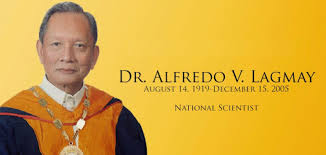
Alfredo Villagracia Lagmay was one of the most important intellectual figures in twentieth-century Philippine history a pioneering psychologist, distinguished educator, and National Scientist whose contributions fundamentally shaped the development of scientific psychology in the Philippines.
As a student and direct disciple of B.F. Skinner at Harvard University, he brought the cutting-edge methods of behaviorist psychology to the Philippines at a time when the discipline was still developing its academic foundations in the country.
Through decades of teaching, research, and institution-building at the University of the Philippines Diliman, Lagmay trained generations of Filipino psychologists and established the intellectual framework upon which the Philippine psychological profession continues to stand.
Profile Details
| Full Name | Alfredo Villagracia Lagmay |
| Born | August 14, 1919 |
| Died | December 15, 2005 (aged 86) |
| Birthplace | Manila, Philippines |
| Nationality | Filipino |
| Occupation | Psychologist, Academic, Professor |
| Institution | University of the Philippines Diliman |
| Awards | National Scientist of the Philippines (1988) |
| Children | Alfredo Mahar Lagmay (son, UP geology professor) |
Early Life
Alfredo Villagracia Lagmay was born on August 14, 1919, in Manila, Philippines, to a family that had come to the city from the Ilocos region. His father was an immigrant from Ilocos who worked in a pre-war gas company called Sacony. The family lived in the historic district of Intramuros in Manila, and by Lagmay’s own account, they struggled with poverty during his childhood. Despite the hardships of his early circumstances and even discouragement from some family members who could not see the practical value of extensive study young Alfredo possessed an unusually strong love of learning and a disciplined commitment to his education.
His intellectual gifts were evident from his earliest schooling. He graduated from Burgos Elementary School as valedictorian, a remarkable achievement that set the tone for an academic career characterized by consistent excellence. As a student at Aurellio High School, he was also athletically gifted, participating in the 100-meter dash. His combination of intellectual and physical energy gave him the confidence and drive to pursue opportunities that would take him far from his modest beginnings in Intramuros.
Education
Alfredo Lagmay pursued his university education at the University of the Philippines Diliman, where he earned his Bachelor of Philosophy (Ph.B.) degree in 1947, graduating cum laude the highest academic distinction. This strong undergraduate performance, achieved while also serving as an instructor at UP from 1947 onwards, reflected his exceptional academic caliber.
While teaching at UP, Lagmay enrolled in the Master of Arts program in Philosophy, completing the degree requirements while simultaneously pursuing his doctoral studies. He graduated in absentia in 1951, having already departed for Harvard University in 1950 on a UP fellowship for advanced studies in psychology. At Harvard, he came under the direct mentorship of B.F. Skinner one of the most influential psychologists of the twentieth century and the founder of the radical behaviorism movement. Training under Skinner gave Lagmay not just technical expertise in experimental psychology but a foundational philosophical orientation toward the scientific study of behavior.
He completed his Master of Arts degree from Harvard in 1951 and continued his doctoral studies there, earning his Doctor of Philosophy in experimental psychology in 1955 a landmark achievement that made him one of the most highly trained psychologists in the Philippines at that time.
Career
Upon returning to the Philippines from Harvard in 1955, Alfredo Lagmay resumed his position at the University of the Philippines, now as Assistant Professor of Psychology. With his Harvard training and the direct influence of B.F. Skinner, he set about transforming the study of psychology at UP and, by extension, in the Philippines as a whole.
The most significant intellectual contribution of Lagmay’s career was the introduction of behavioral studies into Philippine psychology. Before his return, psychology in the Philippines was largely rooted in more classical, philosophical, and introspective traditions. Lagmay’s Skinnerian training gave him the tools to establish an experimental, scientific approach to the discipline one grounded in objective observation, controlled experimentation, and empirical data. This represented a fundamental shift in how psychology was understood and practiced in the Philippines.
He published numerous researches throughout his career, focusing particularly on the experimental analysis of behavior, behavior modification, relaxation and related states, and hypnosis. His work on the Philippine Thematic Apperception Test (1966) a psychological projective test demonstrated his ability to adapt psychological tools to the Filipino cultural context, a contribution that was both academically rigorous and practically relevant.
Lagmay became Chair of the UP Department of Psychology in 1970, making him the first elected chair of the department a recognition of his central role in building the discipline at the university. He was awarded a Professorial Chair in Psychology by the University of the Philippines from 1973 to 1975, honoring his exceptional contributions to research and teaching.
Beyond his own research and teaching, Lagmay was a key institution-builder in Philippine psychology. He was the founding father of the Psychological Association of the Philippines (PAP), the premier professional organization for psychologists in the country, playing a pivotal role in organizing and elevating the profession. He was also a member of prestigious international bodies including the International Council of Psychologists, the American Psychological Association, and the International Association of Applied Psychology.
His circle of intellectual colleagues at UP included some of the most distinguished Filipino scholars of the mid-twentieth century: philosopher Ricardo Pascual, zoologist Agustin Rodolfo, political scientists Cesar Majul and O.D. Corpuz, literary scholar Leopoldo Y. Yabes, and educationist Eleanor Elequin. This circle of rigorous thinkers shared a commitment to scientific inquiry and academic excellence that placed UP at the center of Philippine intellectual life.
Lagmay held various administrative positions at UP throughout his career and continued his research even as he took on administrative responsibilities. He eventually attained the status of Professor Emeritus the highest academic recognition the university can bestow on a retiring faculty member in acknowledgment of his extraordinary lifetime contributions.
Awards & Recognition
- National Scientist of the Philippines (1988) The highest honor conferred by the Philippine government on Filipino scientists
- Professorial Chair in Psychology, University of the Philippines (1973–1975)
- Distinguished Service Award Association for Anthropological Diplomacy, Politics and Society (1984)
- Professor Emeritus, University of the Philippines Diliman
- First Chair, UP Department of Psychology (1970)
- Founding Father, Psychological Association of the Philippines
Personal Life
Alfredo Lagmay was married and had a son, Alfredo Mahar Francisco Amante Lagmay (born 1966), who became a distinguished geologist at the University of the Philippines Diliman and executive director of Project NOAH, the Philippines’ groundbreaking natural hazards monitoring initiative. Mahar Lagmay has continued his father’s legacy of rigorous scientific service to the Filipino people, demonstrating that Alfredo’s passion for science and public service ran deep in the family.
Alfredo Lagmay passed away on December 15, 2005, at the age of 86, having given more than six decades of his life to the advancement of psychology and education in the Philippines.
Notable Works
- “The pacing of behavior: A technique for the control of the free operant” Natural and Applied Science Bulletin (1964)
- “Motivation research in Philippine advertising” Marketing Horizons (1963)
- Philippine Thematic Apperception Test Plates XXV (1966)
- Numerous published researches on experimental analysis of behavior, behavior modification, relaxation studies, and hypnosis
FAQs About Alfredo Lagmay
Who is Alfredo Lagmay?
Alfredo Lagmay was a pioneering Filipino psychologist, Professor Emeritus of the University of the Philippines Diliman, and National Scientist who introduced behavioral psychology to the Philippines after studying under B.F. Skinner at Harvard.
When did Alfredo Lagmay receive the National Scientist award?
He was conferred the National Scientist of the Philippines award in 1988, the highest recognition given to Filipino scientists.
What was Alfredo Lagmay’s connection to B.F. Skinner?
Lagmay was a direct student and mentee of B.F. Skinner at Harvard University, where he completed his PhD in experimental psychology in 1955.
What organization did Alfredo Lagmay found?
He was the founding father of the Psychological Association of the Philippines (PAP), the country’s premier professional organization for psychologists.
Who is Alfredo Lagmay’s son?
His son is Alfredo Mahar Lagmay, a distinguished Filipino geologist at UP Diliman and former executive director of Project NOAH.
Conclusion
Alfredo Villagracia Lagmay’s life and work represent an extraordinary chapter in the intellectual history of the Philippines. Rising from poverty in Intramuros to the heights of academic achievement at Harvard, and from there to the founding of a scientific discipline in his home country, Lagmay embodied the transformative power of education and intellectual dedication. His legacy in the classrooms of UP, in the work of the psychologists he trained, in the institutions he founded, and in the National Scientist award that bears his name among its honorees endures as a testament to what one determined scholar can accomplish for a nation. Alfredo Lagmay remains one of the greatest Filipino scientists of the twentieth century.
