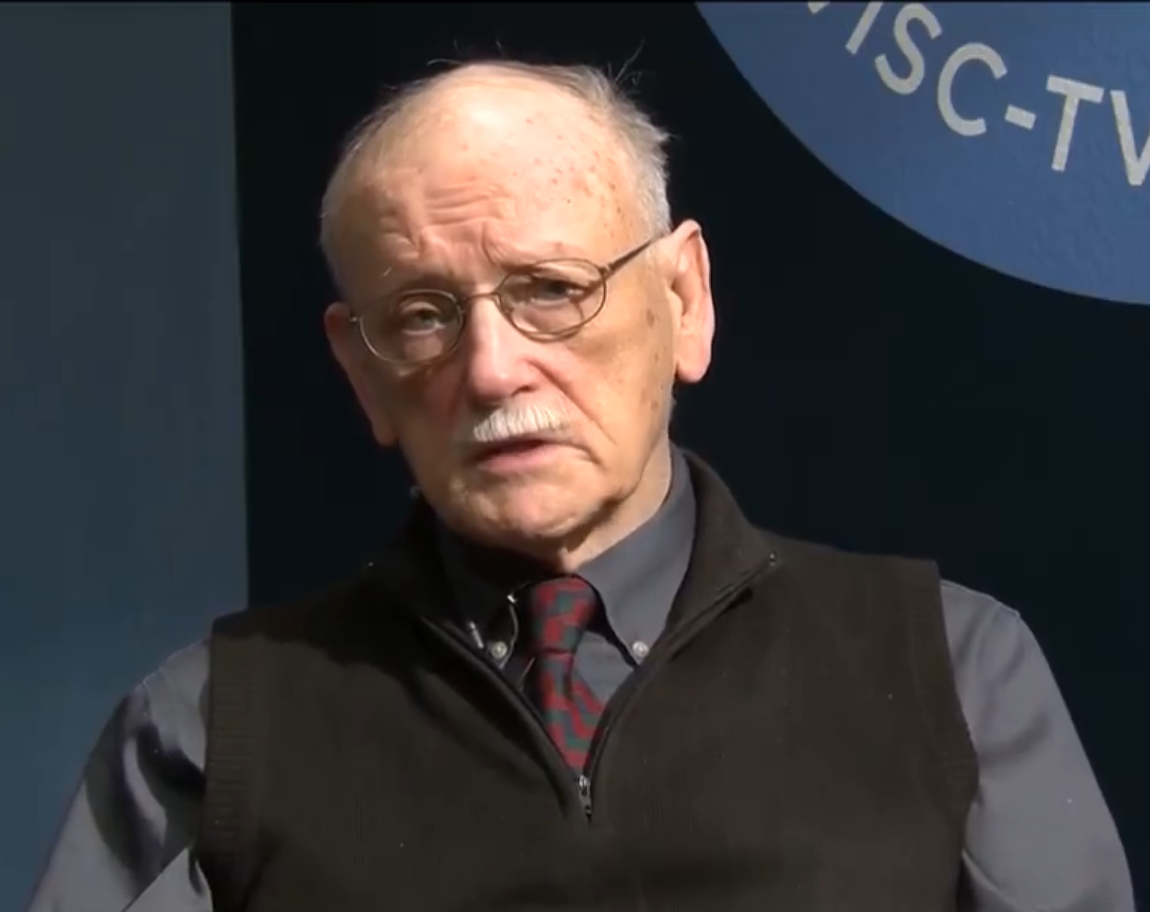
Alfred W. McCoy is one of the most significant American historians of the twentieth and twenty-first centuries, renowned for his groundbreaking scholarship on Southeast Asian history, the political history of the Philippines, United States foreign policy, CIA covert operations, and the global drug trade.
His career has been defined by an extraordinary willingness to pursue controversial and politically sensitive research most famously when the CIA attempted to block publication of his debut book, The Politics of Heroin in Southeast Asia, in 1972.
Far from silencing him, that episode established McCoy’s reputation as a fearless intellectual and set the tone for a half-century of rigorous, award-winning historical scholarship that has fundamentally shaped how scholars and the public understand American power, colonial legacies, and Southeast Asian politics.
Profile Details
| Full Name | Alfred William McCoy |
| Born | June 8, 1945 |
| Age | 79–80 years old (as of 2025) |
| Birthplace | Concord, Massachusetts, United States |
| Nationality | American |
| Occupation | Historian, Academic, Author |
| Institution | University of Wisconsin–Madison |
| Title | Fred Harvey Harrington Professor of History |
Early Life
Alfred William McCoy was born on June 8, 1945, in Concord, Massachusetts, to Alfred Mudge McCoy Jr. and Margarita Piel. He grew up in the United States during the Cold War era, a period when American foreign policy was increasingly entangled in Southeast Asia a region that would come to define his intellectual life and professional career. From an early age, McCoy displayed the intellectual curiosity and appetite for primary source research that would become the hallmark of his historical method.
His path toward Southeast Asian studies was shaped by the confluence of his academic training and the turbulent geopolitical realities of the late 1960s and early 1970s, when American involvement in the Vietnam War brought the region into sharp global focus.
Education
Alfred McCoy received an exceptional academic education at some of the most prestigious institutions in the United States. He earned his Bachelor of Arts degree from Columbia University, before completing his Master of Arts degree at the University of California, Berkeley. He then pursued his doctoral studies at Yale University, where he completed his Doctor of Philosophy in Southeast Asian history in 1977. His dissertation examined factional conflict in Iloilo Province in the Philippines between 1937 and 1955, establishing the empirical foundation for what would become a lifelong scholarly engagement with Philippine political history.
Career
Alfred McCoy’s career as a scholar began dramatically even before he completed his doctoral degree. In 1971, he was commissioned to write a book on the opium trade in Laos. During his research, he uncovered evidence that the French intelligence service (SDECE) had financed covert operations through the control of the Indochina drug trade, and that after the United States replaced the French as the dominant power in Southeast Asia, the CIA had also become implicated in the regional drug trade. The resulting book, The Politics of Heroin in Southeast Asia, published in 1972, was a sensation and a target. The CIA reportedly attempted to block its publication, bringing McCoy considerable personal and professional pressure. The book’s publication nonetheless proceeded, and it went on to be recognized as the definitive scholarly work on the global drug traffic, running to three English editions and translations into nine foreign languages.
Following the completion of his PhD at Yale in 1977, McCoy held academic positions at Yale University and the University of New South Wales before joining the faculty of the University of Wisconsin–Madison, where he has remained for the bulk of his career. He eventually became the Fred Harvey Harrington Professor of History one of the university’s most distinguished named professorships and served as Director of the Center for Southeast Asian Studies, a federally funded National Resource Center.
His subsequent books on the Philippines have won that country’s prestigious National Book Award three times, a remarkable distinction for a foreign scholar. In 2001, the Association for Asian Studies awarded him the Goodman Prize for his career contributions to the historical study of the Philippines. His 1999 book Closer Than Brothers: Plaridel and the Philippine Revolutionary Experience examined the impact of CIA torture training on the Philippine military, anticipating the themes he would develop in his later work on American interrogation methods.
After September 11, 2001, and the subsequent U.S. “War on Terror,” McCoy turned his expertise on CIA covert operations to the question of American torture. His 2006 book A Question of Torture: CIA Interrogation, from the Cold War to the War on Terror was a landmark work that documented the CIA’s development and propagation of psychological torture techniques over more than half a century. The book’s influence was profound: a documentary film based in part on it, Taxi to the Dark Side, won the Academy Award for Best Documentary Feature in 2008.
In 2009, McCoy published Policing America’s Empire: The United States, the Philippines, and the Rise of the Surveillance State, which drew together his decades of research on covert operations and Philippine history to trace the transformative influence of information, surveillance, and police power in shaping both the modern Philippine state and the American internal security apparatus. The book won the prestigious George McT. Kahin Prize from the Association for Asian Studies in 2011.
His 2017 book, In the Shadows of the American Century: The Rise and Decline of US Global Power, offered a sweeping analysis of American imperial power and its likely trajectory, drawing on his decades of research into U.S. foreign policy and covert operations. The book attracted wide attention and sparked significant public debate about the future of American global influence.
Awards & Recognition
- Goodman Prize Association for Asian Studies (2001), for career contributions to the historical study of the Philippines
- Philippine National Book Award Three-time winner for books on Philippine history
- George McT. Kahin Prize Association for Asian Studies (2011), for Policing America’s Empire
- Catholic Mass Media Award, Best Book of the Year (1985) for Philippine Cartoons
- Academy Award for Best Documentary Feature Taxi to the Dark Side (2008, based in part on his work)
Personal Life
Alfred McCoy has dedicated the vast majority of his public life to his scholarship and teaching. He has spent decades at the University of Wisconsin–Madison training doctoral students in Southeast Asian history and producing research that challenges comfortable assumptions about American power, colonial legacies, and intelligence operations. He is regarded by colleagues and former students as a rigorous, principled scholar with an extraordinary gift for archival research and a rare willingness to follow evidence wherever it leads, regardless of the political sensitivity of his findings.
Notable Works
- The Politics of Heroin in Southeast Asia (1972; revised 2003)
- Philippine Cartoons: Political Caricature of the American Era, 1900–1941 (1985)
- An Anarchy of Families: State and Family in the Philippines (editor, 1993)
- Closer Than Brothers: Plaridel and the Philippine Revolutionary Experience (1999)
- A Question of Torture: CIA Interrogation, from the Cold War to the War on Terror (2006)
- Policing America’s Empire: The United States, the Philippines, and the Rise of the Surveillance State (2009)
- In the Shadows of the American Century: The Rise and Decline of US Global Power (2017)
FAQs
Who is Alfred McCoy?
Alfred McCoy is an American historian at the University of Wisconsin–Madison, specializing in Southeast Asian history, Philippine political history, and CIA covert operations.
What is Alfred McCoy’s most famous book?
The Politics of Heroin in Southeast Asia (1972) is his most famous work, documenting CIA involvement in the Southeast Asian drug trade. A Question of Torture (2006) is also widely regarded as a landmark work.
Did the CIA try to stop Alfred McCoy from publishing?
Yes. According to McCoy’s own account, the CIA attempted to block publication of The Politics of Heroin in Southeast Asia in 1972.
Has Alfred McCoy won awards for his work on the Philippines?
Yes. He has won the Philippine National Book Award three times and received the Goodman Prize from the Association for Asian Studies for career contributions to Philippine historical studies.
Conclusion
Alfred W. McCoy is a historian in the truest and most demanding sense of the word a scholar who has spent a career following evidence into uncomfortable territory, confronting powerful institutions with carefully documented findings, and producing works that have permanently changed the historical record.
From the opium fields of the Golden Triangle to the interrogation rooms of CIA black sites, from the colonial archives of Manila to the surveillance apparatus of the American state, McCoy’s scholarship has illuminated some of the darkest and most consequential chapters of modern history. His legacy is that of an intellectual who refused to look away.
