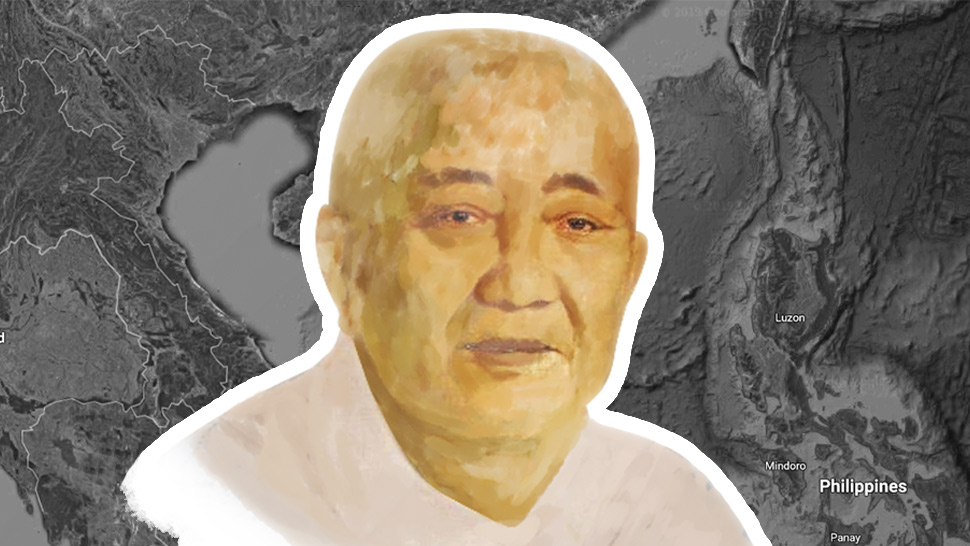
Admiral Tomas Cloma was a Filipino lawyer, maritime educator, fishing magnate, and adventurer who became one of the most intriguing and controversial figures in Philippine history.
He is remembered for two remarkable achievements: founding the Philippine Maritime Institute (PMI), which became the largest maritime education institution in the Philippines, and claiming the Spratly Islands in the South China Sea which he christened “Freedomland” as a free territory in 1956.
His bold territorial claim laid the groundwork for the Philippines’ own assertion of sovereignty over what is now known as the Kalayaan Island Group, a matter that remains highly relevant in today’s ongoing South China Sea disputes.
Though never a commissioned naval officer, Cloma’s daring exploits on the high seas and his passion for maritime exploration earned him the honorary title “Admiral” a nickname that would define his legacy and eventually even land him in legal trouble under the Marcos regime.
Profile Details
| Full Name | Tomas Cloma |
| Born | September 18, 1904 |
| Died | 1996 |
| Birthplace | Panglao, Bohol, Philippines |
| Nationality | Filipino |
| Occupation | Lawyer, Mariner, Maritime Educator, Explorer, Fishing Magnate |
| Known For | Claiming the Spratly Islands as “Freedomland”; founding the Philippine Maritime Institute |
| Parents | Ciriaco Cloma y Arbotante (Father), Irenea Arbolente y Bongay (Mother) |
Early Life
Tomas Cloma was born on September 18, 1904, to Ciriaco Cloma y Arbotante, a Spanish immigrant, and Irenea Arbolente y Bongay, a native of Panglao, Bohol, in the central Philippines. Growing up in the coastal community of Panglao, the sea was an inescapable part of life. Like other children in the area, Cloma was drawn to the ocean but unlike most, he looked out at it and saw something far beyond mere sustenance or transport. He saw adventure, possibility, and destiny.
His coastal upbringing gave him a deep familiarity with the sea from childhood, and this connection would shape every major chapter of his life, from his education to his career as a lawyer, his ventures as a fisherman and entrepreneur, and his most dramatic act the claiming of an unoccupied island group in the heart of the South China Sea.
Education
Tomas Cloma pursued a career in law and became a lawyer by profession. His legal training would later prove crucial when he attempted to assert and defend his territorial claims over Freedomland before Philippine and international authorities. He is also credited with using his legal acumen to formally draft the proclamations, notices, and documents associated with his claim over the Spratly Islands, presenting himself and his associates as private citizens exercising the rights of discovery and occupation under international law.
Career
Cloma’s professional life had two defining pillars: maritime education and territorial exploration.
In the realm of education, he founded the Philippine Maritime Institute (PMI), which grew to become the largest maritime education institution in the Philippines. PMI trained generations of Filipino seafarers at a time when the Philippines was becoming one of the world’s most significant sources of merchant marine crews. Cloma’s foresight in establishing a dedicated institution for maritime education earned him the lasting title “Father of Maritime Education in the Philippines.”
His second and perhaps more dramatic achievement was his discovery and claim over the Spratly Islands. Beginning in 1947, Cloma conducted fishing expeditions in the South China Sea west of Palawan, venturing into waters that contained numerous unoccupied islands, cays, reefs, and shoals. Fascinated by the territory’s resources particularly the abundant fish stocks and the valuable guano deposits on the islands he continued his expeditions from 1947 to 1950.
On May 11, 1956, Cloma made his most audacious move. Together with 40 men, he formally took possession of the islands lying approximately 612 kilometers west of Palawan, naming the territory the “Free Territory of Freedomland.” He sent a formal notice to the Philippine Department of Foreign Affairs announcing that he and his associates were claiming the territory based on the rights of discovery and occupation, open and adverse to the whole world. He made clear that this claim was being made by Filipino citizens, not on behalf of the Philippine government.
Cloma’s proclamation set off immediate diplomatic protests from Vietnam, Taiwan, and China, all of whom had their own claims on parts of the Spratly archipelago. The Philippine government itself was initially cautious, neither endorsing nor rejecting Cloma’s claim. Undeterred, Cloma attempted to bring the issue before the United Nations and the International Court of Justice to strengthen his position. He even drafted a constitution for Freedomland, appointed ambassadors, and established a flag for the territory the albatross, a bird common to the islands.
In 1972, his colorful nickname caught up with him: President Ferdinand Marcos had Cloma jailed for four months on charges of “impersonating a military officer” by allowing himself to be called “Admiral.” By 1974, Cloma had transformed the Free Territory through several iterations, ultimately stepping down and passing the reins of what he called the Kingdom of Colonia St. John. In 1978, Marcos issued a decree formally incorporating a substantial portion of Cloma’s claimed territory into the Philippines as the municipality of Kalayaan in Palawan effectively absorbing what Cloma had spent decades fighting to establish.
Though his dream of an independent Freedomland was never realized, Cloma’s claim served as the basis for the Philippines’ continued assertion of sovereignty over the Kalayaan Island Group, which remains a key element of Philippine territorial claims in the South China Sea to this day.
Personal Life
Tomas Cloma was described by those who knew him as a dreamer with an idealistic, romantic spirit a man driven not purely by business interests but by a genuine vision of creating something new and meaningful. His brother Filemon Cloma was closely involved in the Freedomland venture and shared in both its adventures and its setbacks. In an interview conducted when Cloma was 87 years old, he was reportedly still cheerful and spirited, rocking in his chair and breaking into song singing his own composition, “Freedomland, O Freedomland, the home of the free.”
Tomas Cloma passed away in 1996. A statue of him now stands in Quezon City as a tribute to his legacy as an explorer, educator, and patriot.
Legacy
Tomas Cloma’s legacy is a dual one: as the founder of maritime education in the Philippines, he helped shape a seafaring nation’s human capital for generations. As the man who claimed Freedomland, he planted the seed of Philippine sovereignty over the Kalayaan Islands a claim that continues to matter in the complex and contested geopolitics of the South China Sea. He has been called the “Modern Magellan of the Philippines,” and his life story is a testament to the power of individual audacity in shaping the history of nations.
FAQs
Who is Admiral Tomas Cloma?
Tomas Cloma was a Filipino lawyer, mariner, and educator best known for claiming the Spratly Islands as “Freedomland” in 1956 and for founding the Philippine Maritime Institute.
What is Freedomland?
Freedomland was the name Cloma gave to the group of islands in the South China Sea that he claimed in 1956. It was later incorporated into the Philippines as the Kalayaan Island Group.
Why was Tomas Cloma jailed?
Cloma was jailed for four months in 1972 under the Marcos administration for allegedly impersonating a military officer by using the title “Admiral.”
What happened to Freedomland?
In 1978, President Marcos issued a decree formally incorporating Freedomland’s territory into the Philippines as the municipality of Kalayaan, Palawan.
Is Tomas Cloma still relevant today?
Yes. His territorial claim forms part of the historical basis for the Philippines’ ongoing assertion of sovereignty over the Kalayaan Island Group in the South China Sea.
Conclusion
Admiral Tomas Cloma was a man of rare courage and vision a lawyer who became an explorer, an educator who became a territorial claimant, and a dreamer who dared to stand before the world and declare a new free land in the middle of the South China Sea. Though Freedomland never achieved the independent status he envisioned, its legacy lives on in the Philippines’ continued claim to the Kalayaan Islands. Cloma stands as one of the Philippines’ most colorful and consequential historical figures a true Filipino original whose life reads more like adventure fiction than biography.
