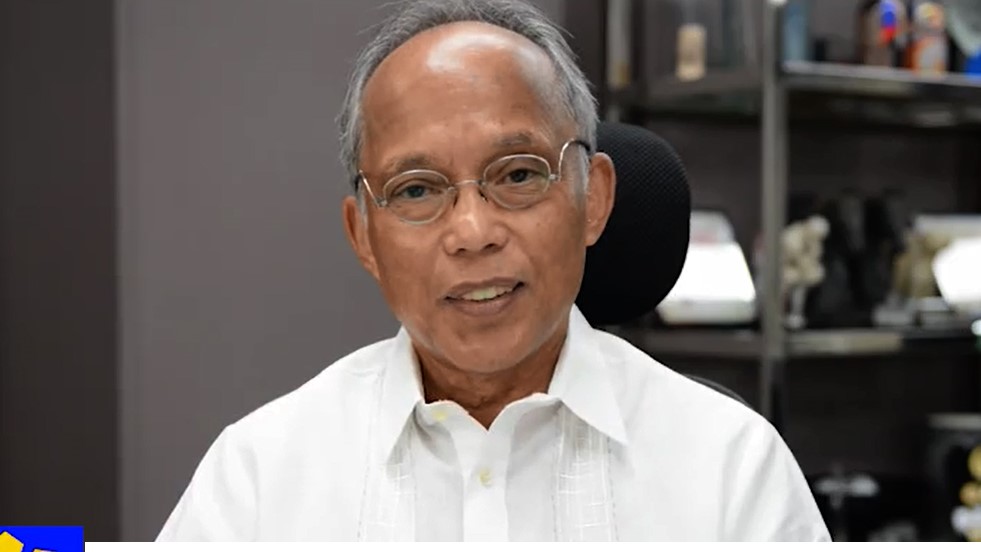
Alfonso “Al” Gaba Cusi is a Filipino businessman and government official who has spent more than four decades navigating the complex intersection of private enterprise and public service in the Philippines.
He is best known for his tenure as the 14th Secretary of the Department of Energy (DOE) under President Rodrigo Duterte from 2016 to 2022, a period during which he oversaw major energy policy decisions affecting millions of Filipinos.
He has also served in significant government positions under the Arroyo administration, heading the Philippine Ports Authority, the Manila International Airport Authority, and the Civil Aviation Authority of the Philippines.
Beyond government, he is the founder of Starlite Ferries, a modern inter-island shipping company based in Batangas.
Profile Details
| Full Name | Alfonso Gaba Cusi |
| Born | December 5, 1949 |
| Age | 75 years old (as of 2025) |
| Birthplace | Roxas, Oriental Mindoro, Philippines |
| Nationality | Filipino |
| Occupation | Businessman, Government Official, Politician |
| Spouse | Maria Angeles S. Cusi |
| Political Party | Partido Demokratiko Pilipino (PDP) |
Early Life
Alfonso Gaba Cusi was born on December 5, 1949, in Roxas, Oriental Mindoro a province in the MIMAROPA region of the Philippines. He grew up in a provincial environment that instilled in him a grounded perspective and a strong work ethic. His roots in Oriental Mindoro and Cebu City shaped his identity as someone who understood both the provincial realities of the Philippines and the demands of national-scale governance and enterprise.
From an early age, Cusi demonstrated the qualities of leadership and strategic thinking that would define his career across both the private sector and the halls of government. His family background and provincial upbringing gave him an appreciation for the importance of infrastructure, connectivity, and economic development in the lives of ordinary Filipinos themes that would run throughout his public service career.
Education
Alfonso Cusi pursued a rigorous academic path. He completed his Bachelor of Science degree in 1972 from the University of St. La Salle (now La Salle College) in Bacolod. He then pursued advanced studies, earning his Master of Business Administration (MBA) degree from the University of the Philippines-Cebu in 1976. This combination of a business undergraduate degree and a graduate management education from UP equipped him with the analytical and leadership tools he would deploy across multiple sectors over the following decades.
Career
Alfonso Cusi’s career is best understood as a seamless movement between the private sector, where he built businesses in logistics and transportation, and the public sector, where he applied those skills to the management of some of the Philippines’ most critical infrastructure agencies.
In the private sector, Cusi’s most significant venture was the founding of Starlite Ferries, Inc., a Batangas-based shipping company that began operations in 1995 serving the Batangas-Calapan, Mindoro and Roxas-Caticlan routes. Under his leadership, Starlite Ferries became a pioneer in modernizing Philippine maritime transportation, acquiring brand-new roll-on/roll-off (Ro-Ro) vessels from Japan designed for operations in the often rough waters of the Philippine archipelago. He also founded Starlite Cargo Express and Quick Stop, a chain of convenience stores, demonstrating his entrepreneurial versatility beyond shipping.
His entry into government service came in early 2001, when President Gloria Macapagal-Arroyo appointed him as General Manager of the Philippine Ports Authority (PPA), a position he held until July 2004. During this period, he was instrumental in launching the Strong Republic Nautical Highway, a major infrastructure project that linked Luzon, Mindoro, Panay, and Zamboanga del Norte along the Philippines’ western seaboard, improving maritime connectivity for millions of Filipinos.
From August 2004 to March 2010, Cusi served as General Manager of the Manila International Airport Authority (MIAA). One of his most significant achievements in this role was spearheading the opening of NAIA Terminal 3 in 2008 a much-delayed project that had become a symbol of government dysfunction. Bringing Terminal 3 online was a major operational and symbolic accomplishment.
In March 2010, Cusi was appointed Director-General of the Civil Aviation Authority of the Philippines (CAAP), a role he held until December 2010. During this brief but important tenure, he laid the groundwork for restoring the Philippines’ Category 1 aviation safety status a critical upgrade that allowed Philippine airlines to expand their American routes.
After returning to the private sector for several years, Cusi was called back to public service in 2016 by President Rodrigo Duterte, who appointed him Secretary of the Department of Energy (DOE) the position that would define his public legacy. Serving as the 14th DOE Secretary from June 30, 2016, to June 30, 2022, Cusi oversaw the Philippines’ energy sector during a period of significant challenge and transformation.
As DOE Secretary, Cusi championed consumer welfare as a central principle, consistently emphasizing that the measure of his department’s success was how well it served the energy needs of the Filipino people. He prioritized the Malampaya natural gas project as a cornerstone of energy security, pushed for favorable outcomes on tax disputes to attract investors, and advanced policies promoting both conventional and renewable energy sources. He was a firm advocate for energy security and worked to ensure that the Philippines had adequate supply to support economic growth.
In the political arena, Cusi also became a significant figure within the ruling Partido Demokratiko Pilipino-Lakas ng Bayan (PDP-Laban), eventually becoming its president during the Duterte administration and later serving as Vice Chairman of the Partido Demokratiko Pilipino following a reorganization of the party.
Personal Life
Alfonso Cusi is married to Maria Angeles S. Cusi. He is known as a pragmatic, results-driven individual whose four decades of leadership experience have given him a nuanced understanding of both the private and public sectors. His life has been defined by a consistent focus on infrastructure, logistics, and energy sectors that are foundational to the Philippines’ economic development.
Awards & Recognition
Alfonso Cusi’s recognition comes primarily from his professional accomplishments rather than formal awards.
His tenure at the PPA, MIAA, CAAP, and DOE are cited as periods of meaningful institutional contribution.
The successful opening of NAIA Terminal 3, the launch of the Strong Republic Nautical Highway, and the advancement of energy security policies under his DOE watch are among his most lasting achievements.
FAQs
Who is Alfonso Cusi?
Alfonso Cusi is a Filipino businessman and former government official who served as the 14th Secretary of the Department of Energy under President Rodrigo Duterte from 2016 to 2022.
What is Starlite Ferries?
Starlite Ferries is a shipping company founded by Alfonso Cusi, based in Batangas, that operates inter-island ro-ro routes in the Philippines.
What did Alfonso Cusi accomplish at MIAA?
As General Manager of the Manila International Airport Authority, he oversaw the 2008 opening of the long-delayed NAIA Terminal 3.
What political party is Alfonso Cusi associated with?
He is associated with the Partido Demokratiko Pilipino (PDP), formerly PDP-Laban, of which he served as president during the Duterte administration.
Conclusion
Alfonso Cusi’s career represents a model of public-private sector synergy in the Philippines. His decades of experience in logistics, maritime transport, aviation, and energy have allowed him to bring a uniquely practical and business-minded approach to government service.
Whether negotiating energy contracts, opening airports, or modernizing sea routes, Cusi has consistently demonstrated a capacity for large-scale institutional leadership. His legacy across the PPA, MIAA, CAAP, and DOE reflects a life dedicated to building the Philippines’ physical and economic infrastructure for the benefit of its people.
