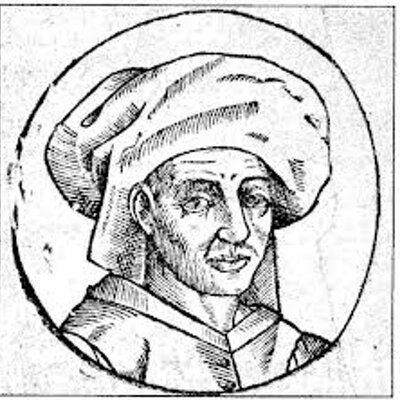
Adam de la Halle, also known as Adam le Bossu (“Adam the Hunchback”), was one of the most remarkable creative figures of medieval Europe. A French trouvère, poet, playwright, and composer, he stood at the crossroads of two distinct musical worlds the older tradition of monophonic trouvère song and the emerging polyphonic style of the thirteenth century.
He has long been regarded as one of the most important musical and literary figures of thirteenth-century Europe, and his theatrical works in particular were so ahead of their time that they foreshadow the development of comic opera centuries later.
Though much of his life remains shrouded in historical uncertainty, the works he left behind from love songs and poetic debates to a pioneering musical play speak clearly to his extraordinary gifts and enduring influence on Western music and drama.
Profile Details
| Full Name | Adam de la Halle (also known as Adam le Bossu) |
| Born | c. 1245–1250 |
| Died | c. 1285–1288, possibly after 1306 |
| Birthplace | Arras, France |
| Place of Death | Naples, Italy (possibly England) |
| Nationality | French |
| Occupation | Poet, Composer, Playwright, Trouvère |
| Known For | Jeu de Robin et Marion, polyphonic motets, chansons |
Early Life
Adam de la Halle was born around 1245 to 1250 in the city of Arras, in the Artois region of northern France. His nickname, “le Bossu” (the Hunchback), appears in many historical references, though some scholars believe it may have been an ironic or inherited family name rather than a description of a physical condition. His father, Maître Henri de la Halle, was a notable citizen of Arras, and both father and son became embroiled in the political and civil conflicts that shook the city during the mid-thirteenth century, at one point taking refuge in the nearby city of Douai.
Arras in the thirteenth century was a thriving commercial city and a vibrant center of literary and musical culture. It was home to the pui, an association of poets and musicians who gathered regularly to compose and perform songs in the trouvère tradition a lyric poetry movement in Old French that flourished in northern France during the twelfth and thirteenth centuries. Growing up in this environment, Adam was steeped in both the musical traditions and the literary debates of his age.
Education
Adam is believed to have studied in Paris, most likely at a religious school or university during the formative years of his youth. His learning is evident in the sophistication of his works, which draw on theology, philosophy, and the emerging polyphonic musical theory of his era. He was active as a member of the Arras pui before entering the service of Robert II, Count of Artois, a patronage that would take him far beyond his hometown. He later travelled to Italy in the service of the count’s uncle, Charles of Anjou, King of Sicily, where he spent time at the French court in Naples.
Career
Adam de la Halle’s career unfolded at the very end of the trouvère tradition in France, representing what many scholars have called its final and most accomplished generation. His body of work was unusually diverse: he composed in virtually every genre current in the thirteenth century, bridging the older monophonic tradition with the newer polyphonic forms that were becoming dominant in European music.
Among his monophonic works, he composed chansons courtly love songs in the tradition of the trouvères as well as jeux-partis, a form of poetic debate in which two participants argue opposing positions on a question of love. These works demonstrate his mastery of conventional trouvère forms, his elegant use of language, and his skill as a lyric poet in the vernacular tradition.
In the realm of polyphony, Adam was equally accomplished. He wrote polyphonic rondeaux (rondels) and motets sophisticated multi-voice compositions rooted in the liturgical polyphonic tradition of the period. That he excelled in both the older monophonic and the newer polyphonic styles has led scholars to describe him as both a conservative and a progressive, a composer whose legacy is complex precisely because he embraced multiple traditions simultaneously.
His most celebrated and historically significant contribution, however, was in the realm of theater. Around 1262 to 1263, while still in Arras, Adam composed Le Jeu de la Feuillée (The Play of the Bower), a remarkable work that blends fantasy, autobiographical material, and satirical social commentary. It is widely regarded as one of the earliest comedies in the French language and demonstrates a sophistication in theatrical writing that was entirely without precedent.
Later, around 1282 to 1283, while at the French court in Naples in the service of Charles of Anjou, Adam wrote his masterwork: Le Jeu de Robin et de Marion (The Play of Robin and Marion). This musical play combines sung passages with spoken dialogue, telling the charming story of a shepherdess named Marion, her shepherd sweetheart Robin, and a knight who attempts to woo her away from him. Considered the earliest surviving secular French play with music, it is widely regarded as a forerunner of the comic opera tradition, anticipating a form of musical theater that would not be fully developed again for centuries.
Adam de la Halle also wrote Le Jeu du Pèlerin (The Pilgrim’s Play), a short dramatic work believed to have been written in honor of Charles of Anjou, and a lengthy narrative poem, Le Roi de Sicile, celebrating the deeds of his patron. His works survive in a remarkable number of medieval manuscripts, which is itself a testament to the high esteem in which he was held by contemporaries and later generations.
Awards & Recognition
Adam de la Halle received no formal awards in the modern sense, but his recognition among contemporaries and in posterity has been remarkable for a medieval artist. His works were copied and preserved in numerous manuscripts, indicating that they were valued highly by scribes and patrons of the time. Among people born in France during the medieval period, modern scholarship has ranked him among the most historically significant literary and musical figures. He is frequently described as the last and greatest of the trouvères, and his theatrical innovations have earned him a lasting place in the history of both music and drama.
Personal Life
Among the autobiographical details that can be gleaned from his own writings, Adam de la Halle had a wife named Marie, whom he appears to have genuinely loved. His play Le Jeu de la Feuillée contains passages that scholars interpret as reflections on his personal situation including his longing to leave Arras to pursue studies in Paris, and what appears to be ambivalence about leaving his wife behind. The work blends the personal with the satirical in a way that was highly unusual for its era, suggesting a man of unusual self-awareness and literary boldness.
His later years were spent at the court of Charles of Anjou in Naples, where he is believed to have died around 1288, though some accounts suggest he may have survived until after 1306 and possibly visited England. The exact circumstances of his death and his final years remain uncertain.
Works (Discography / Bibliography)
Adam de la Halle’s surviving works represent one of the most complete collections associated with any medieval composer:
- Le Jeu de la Feuillée (c. 1262–1263) Early comedy play
- Le Jeu de Robin et de Marion (c. 1282–1283) Musical play, precursor to comic opera
- Le Jeu du Pèlerin — Short dramatic work
- Le Roi de Sicile — Narrative poem in honor of Charles of Anjou
- 36 monophonic chansons
- 17 jeux-partis (poetic debates)
- 16 polyphonic rondeaux
- 5 motets
Legacy
Adam de la Halle’s legacy rests on multiple pillars. As a trouvère, he brought the medieval lyric tradition to its culmination. As a polyphonic composer, he connected the older monophonic world with the new. And as a playwright arguably his greatest achievement he created theatrical works of such originality and humor that they stand as founding documents of secular European drama and musical theater. Le Jeu de Robin et de Marion in particular continues to be studied, performed, and admired today, nearly 750 years after it was first presented.
FAQs About Adam de la Halle
What is Adam de la Halle best known for?
Adam de la Halle is best known for his musical play Le Jeu de Robin et de Marion, considered the earliest surviving secular French play with music and a forerunner of comic opera.
Why is Adam de la Halle called “le Bossu”?
The nickname “le Bossu” means “the Hunchback.” Some scholars believe it described a physical condition, while others suggest it may have been an ironic family nickname.
When did Adam de la Halle live?
He was born around 1245–1250 in Arras, France, and died around 1285–1288, possibly as late as after 1306.
What genres did Adam de la Halle compose in?
He composed in virtually every genre of his era: monophonic chansons, jeux-partis, polyphonic rondeaux and motets, and theatrical plays with music.
Is Adam de la Halle considered the father of comic opera?
Many music historians consider his Le Jeu de Robin et de Marion to be a direct forerunner of the comic opera, making him a foundational figure in that tradition.
Conclusion
Adam de la Halle was a towering figure of medieval European culture a poet, composer, and dramatist who excelled in every form he attempted and whose most daring work anticipated theatrical and musical developments that would not be fully realized for centuries. His unique ability to straddle the older world of monophonic trouvère song and the newer world of polyphonic composition, combined with his astonishing theatrical innovation, makes him a figure of enduring historical importance. Whether remembered as the last of the great trouvères or the first of the great secular dramatists, Adam de la Halle’s legacy is one of the most multifaceted and fascinating in the entire history of Western art.
