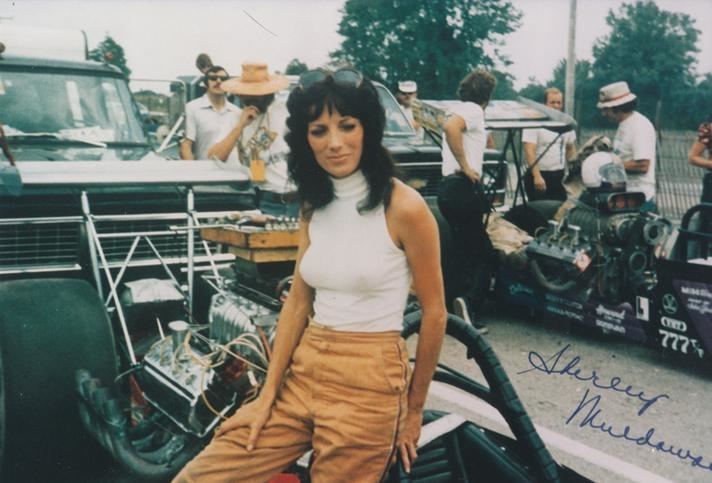
Long before women were welcomed anywhere near a starting line, Shirley Muldowney strapped herself into a Top Fuel dragster and forced an entire sport to take her seriously.
She would go on to become the first woman ever licensed by the National Hot Rod Association to drive a Top Fuel car, and later the first driver of either sex to win the NHRA Top Fuel championship more than once.
Her nickname, “Cha Cha,” and her title, the “First Lady of Drag Racing,” have followed her for more than five decades.
Muldowney is known not only for her speed but for her defiance. She entered a world that actively tried to keep her out, faced open hostility from rival racers and sanctioning bodies alike, and answered every doubt with a trophy.
Three NHRA Top Fuel world championships, eighteen national event wins, and a near-fatal crash that would have ended most careers instead became chapters in one of motorsport’s most remarkable comeback stories.
Her story matters far beyond the drag strip. Muldowney’s rise mirrored a broader cultural shift, as women across America pushed into spaces that had been closed to them for generations.
Today, decades after her final race, she remains a touchstone for female athletes in motorsports and a reminder that talent, once given the smallest opening, can rewrite the rules of an entire industry.
Profile
| Full Name | Shirley Ann Roque Muldowney |
| Born | June 19, 1940 |
| Age | 85 years old |
| Birthplace | Burlington, Vermont, United States |
| Nationality | American |
| Occupation | Professional drag racer (retired) |
| Height | 5 feet 7 inches (approximately 1.70 m) |
| Parents | Benedict Roque and Mae Roque |
| Spouse | Jack Muldowney (married 1956, divorced 1972); Rahn Tobler (married 1988) |
| Children | John Muldowney (1957–2017) |
| Net Worth | $10 million |
Early Life
Shirley Ann Roque was born on June 19, 1940, in Burlington, Vermont, to parents of Belgian descent, Benedict and Mae Roque. While she was still a child, the family relocated to Schenectady, New York, where she spent the rest of her childhood. Formal schooling never held much appeal for her; by her own admission, what genuinely excited her was speed, engines, and the freedom of the open road rather than anything a classroom could offer.
That restlessness found an outlet early. As a teenager in the 1950s, she began street racing around Schenectady, drawn to the raw thrill of outrunning the boys who assumed a girl had no business behind the wheel. At just sixteen years old, she married nineteen-year-old Jack Muldowney, who built her very first dragster and taught her the fundamentals of driving and tuning a race car. That early partnership, forged in a garage rather than a classroom, effectively became her entire education in the sport that would define her life.
Growing up in a working-class household during an era when motorsports were considered strictly off-limits to women shaped Muldowney’s combative, no-apologies approach to racing. She never framed her ambitions as a protest or a statement; she simply refused to accept that gender should determine who was allowed to compete. That mindset, hardened during her teenage years on the streets of Schenectady, became the foundation for everything she later achieved on NHRA’s biggest stages.
Career
Muldowney’s path from street racer to professional competitor began in the late 1950s and accelerated through the following decade. She made her drag strip debut in 1958 at Fonda Speedway, and by the early 1960s she was competing regularly on the local circuit, steadily building a reputation as a driver who could hang with, and often beat, her male competitors. Her breakthrough moment arrived in 1965, when she became the first woman ever granted an NHRA competition license, a milestone that opened doors no woman had previously been allowed through.
The path from licensed driver to Top Fuel champion was neither quick nor welcoming. NHRA officials, fellow racers, and much of the sport’s establishment resisted her presence, viewing Top Fuel as an inherently male domain. Muldowney pushed forward regardless, earning her Top Fuel license in 1973 and steadily proving that she belonged among the sport’s elite. Her persistence paid off emphatically in 1977, when she captured the NHRA Winston world points championship, becoming the first woman in history to win drag racing’s most prestigious title.
That first championship was only the beginning. Muldowney added a second Top Fuel title in 1980 and a third in 1982, becoming the first driver of any gender to win the championship more than once, let alone three times. Across her career she claimed eighteen NHRA national event victories, cementing a level of dominance that silenced most of her early critics. Her aggressive driving style and relentless preparation made her one of the most feared competitors on the strip during drag racing’s most competitive era.
Disaster struck in 1984, when a catastrophic crash during a race in Canada shattered her hands, pelvis, and legs. Doctors and fans alike questioned whether she would ever race again, and she endured roughly eighteen months of surgeries and rehabilitation to rebuild her body. True to form, Muldowney returned to competition in the late 1980s, walking with the aid of a cane during public appearances even as she plotted her way back to the driver’s seat. She continued competing well into the 1990s, racing in International Hot Rod Association events and match races even without the backing of major sponsorship, before eventually stepping away from full-time competition in the early 2000s.
Education
Muldowney has been open about the fact that traditional schooling never captured her interest during her youth in Schenectady. Rather than pursuing formal academic qualifications, she directed her energy into learning mechanics and driving directly from her first husband, Jack Muldowney, treating the garage and the drag strip as her real classroom.
Awards & Nominations
- First woman named to the Auto Racing All-American Team, 1975
- Drag News Top Fuel Driver of the Year, 1976 and 1977
- NHRA Top Fuel World Champion, 1977, 1980, and 1982
- Outstanding Achievement Award, United States House of Representatives, 1977
- Car Craft magazine Person of the Year
- Inducted into the Motorsports Hall of Fame of America, 1990
Personal Life
Muldowney’s personal and professional lives have long been intertwined with the racing world. She married her first husband, Jack Muldowney, at sixteen; he built her earliest dragsters and mentored her driving before the couple divorced in 1972, though they remained on good terms until his death. Her only child, John Muldowney, was born from that marriage and grew up immersed in the sport, eventually working as a fabricator and crew member on his mother’s cars throughout her championship years.
In 1988, Muldowney married Rahn Tobler, a respected drag racing crew chief whose technical expertise supported much of her later career on the circuit. Her life outside racing has not been free of hardship. Her son John died suddenly in 2017 at the age of fifty-nine, a loss she has described as one of the most painful of her life. In 2016, she also faced a frightening health scare when an initial diagnosis of lung cancer was later revealed to be histoplasmosis, a treatable fungal infection, allowing her to continue her public appearances at NHRA events.
Muldowney’s 1984 crash remains one of the defining moments of her personal story, both for the severity of her injuries and for the determination she showed in returning to the sport afterward. Beyond racing, she has channeled her public profile into philanthropy through Shirley’s Kids, a charitable initiative that supports children in communities connected to drag racing. Her life was also dramatized in the 1983 film “Heart Like a Wheel,” in which actress Bonnie Bedelia portrayed her, though Muldowney has said the film only partially captured the reality of her experiences.
Net Worth
Shirley Muldowney’s net worth is widely estimated to be in the region of $10 million, a figure built up over more than four decades in professional motorsports. The bulk of her financial success traces back to her competitive earnings during her championship years, when victories and strong finishes at NHRA national events generated substantial prize money at a time when drag racing’s popularity, and its purses, were rapidly expanding.
Beyond race winnings, Muldowney’s stature as a trailblazer made her an attractive partner for sponsors eager to associate their brands with the sport’s most recognizable female competitor. Sponsorship deals, licensing of her image and story, media appearances, and her continued presence at NHRA events, car shows, and racing reunions in her retirement have all contributed additional income streams that have sustained her financial standing well beyond her competitive years.
Athletic Record
- First woman granted an NHRA competition license, 1965
- First woman licensed to drive an NHRA Top Fuel dragster, 1973
- NHRA Top Fuel World Champion: 1977, 1980, 1982
- First driver, male or female, to win multiple NHRA Top Fuel championships
- Eighteen NHRA national event victories across her career
- Survived a near-fatal crash in 1984 and returned to top-level competition
Conclusion
Shirley Muldowney’s legacy extends far beyond her trophies and championship banners. She forced open a door that the sport of drag racing had deliberately kept shut, and she did it not through protest but through sheer, undeniable performance on the track. Every woman who has since climbed into a Top Fuel dragster owes some measure of that opportunity to the barriers Muldowney broke decades earlier.
Even in retirement, her influence continues to ripple through motorsports. She remains a fixture at NHRA events, a mentor figure to younger competitors, and a living reminder that resistance to change rarely survives contact with genuine talent. The “First Lady of Drag Racing” earned that title one race at a time, and her story continues to inspire anyone who has ever been told that a particular arena simply wasn’t meant for them.
