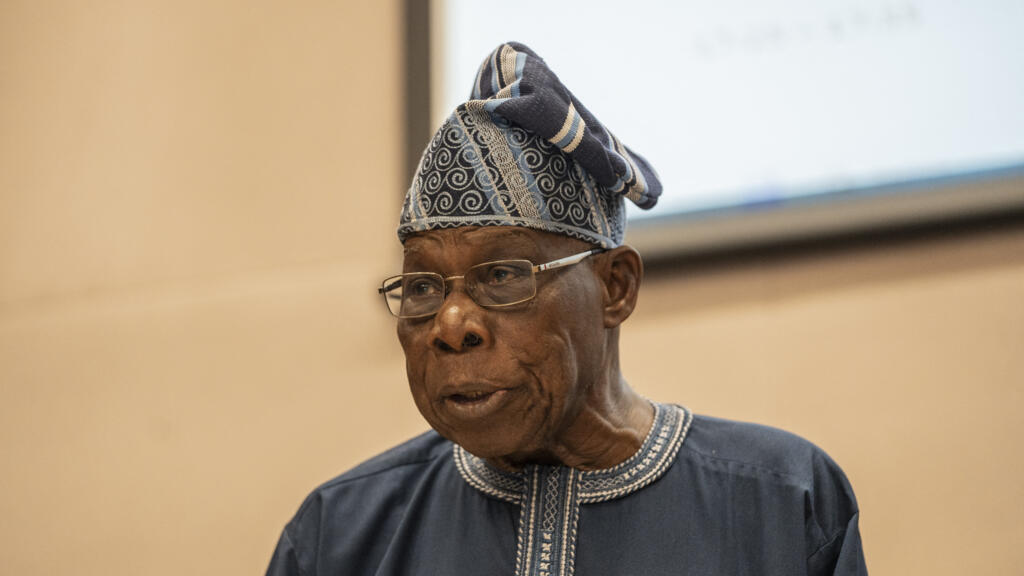
Olusegun Obasanjo is one of Nigeria’s most influential political figures, remembered as the only Nigerian leader to have ruled the country both as a military Head of State and later as a democratically elected civilian President.
Known widely by the nickname “OBJ” or “Baba,” Obasanjo’s decades-long journey from a humble farming village to the highest office in Nigeria has made him a towering figure in African politics. This post takes a deep dive into his life, career, family, and net worth.
Who Is Olusegun Obasanjo?
Olusegun Obasanjo is a retired Nigerian Army general, statesman, and politician who governed Nigeria twice: first as a military Head of State from 1976 to 1979, and later as a democratically elected President from 1999 to 2007.
He is widely regarded as one of Africa’s most significant post-colonial leaders due to his role in Nigeria’s civil war, his voluntary handover of power to civilian rule, and his continued influence on African diplomacy long after leaving office.
Profile
| Full Name | Olusegun Matthew Okikiola Ogunboye Aremu Obasanjo |
| Nickname | OBJ, Baba |
| Born | March 5, 1937 |
| Age | 89 years old |
| Birthplace | Ibogun-Olaogun, Ogun State, Nigeria |
| State of Origin | Ogun State |
| Nationality | Nigerian |
| Ethnicity | Yoruba (Owu branch) |
| Occupation | Politician, Retired Army General, Statesman, Agriculturalist, Author |
| Religion | Christianity (Baptist / Born-again) |
| Parents | Amos Adigun Obasanjo Bankole (father), Bernice Ashabi Bankole (mother) |
| Siblings | Adunni Oluwola (sister) |
| Spouse | Late Stella Obasanjo (m. 1976, died 2005); other partners over the years |
| Children | Several, including Iyabo Obasanjo, Gbenga Obasanjo, Adeboye Obasanjo |
| Net Worth | $1.2 billion and $1.7 billion |
Early Life
Olusegun Obasanjo was born on March 5, 1937, in the small farming village of Ibogun-Olaogun in present-day Ogun State, southwestern Nigeria. He came from a farming family belonging to the Owu branch of the Yoruba ethnic group. His father, Amos Adigun Obasanjo Bankole, was a farmer and palm wine tapper, while his mother, Bernice Ashabi, was a petty trader. Of the couple’s six children, only Olusegun and his sister, Adunni Oluwola, survived into adulthood.
Obasanjo was raised in the Baptist Christian faith, in a village where a Southern Baptist mission had been established, although Muslims also lived within the community; his sister later converted to Islam to marry a Muslim man. As a young boy, he worked on farms, fished, gathered firewood, and sold sand to builders to help fund his education, since his father had abandoned the family, leaving his mother to fend for her children through trading.
He began his schooling at the village primary school before moving to the Baptist Day School in Abeokuta’s Owu quarter in 1951. It was during his secondary school years that young Obasanjo rejected the English forename “Matthew” as a personal act of anti-colonial defiance, a decision that reflected an early sense of independence and national identity.
Education
Obasanjo attended Baptist Boys’ High School in Abeokuta from around 1952 to 1957, where he excelled academically and became an active member of the Boy Scouts. After completing secondary school, he moved to Ibadan to work as a teacher and briefly considered university education, but financial constraints made this impossible. He instead pursued a career in the Nigerian Army, where he later received extensive military and engineering training in institutions across England and India, including the Mons Officers’ Cadet School in Aldershot, the Royal College of Military Engineering in Chatham, and the Indian Army School of Engineering. Decades later, in December 2017, Obasanjo defended a PhD thesis at the National Open University of Nigeria, earning a doctorate in theology.
Career
Obasanjo enlisted in the Nigerian Army in 1958, training as an officer cadet in England before rising steadily through the ranks. He served in the Nigerian contingent of the United Nations peacekeeping force in the Congo and later became commander of the Nigerian Army’s sole engineering unit. During the Nigerian Civil War, he took command of the 3rd Marine Commando Division, leading federal forces to a decisive victory that forced the surrender of Biafran secessionist forces in 1970, an achievement that cemented his reputation as a national war hero.
In 1975, Obasanjo, alongside Murtala Muhammed, took part in a bloodless coup that removed General Yakubu Gowon from power. After Muhammed’s assassination in 1976, Obasanjo was appointed Nigeria’s Head of State. He led the country until 1979, when he became the first military ruler in Nigerian history to voluntarily hand over power to a democratically elected civilian government, led by Shehu Shagari.
Obasanjo returned to political life two decades later, winning Nigeria’s presidential election in 1999 as the country transitioned back to civilian rule after years of military dictatorship. He was re-elected in 2003 and served until 2007, becoming Nigeria’s longest-serving president overall when both terms of leadership are combined. As president, he pursued economic liberalization, anti-corruption reforms, and debt relief negotiations, while also chairing the African Union from 2004 to 2006. His tenure was not without controversy, including allegations of electoral irregularities and a widely criticized attempt to amend the constitution for a third term, which the Nigerian Senate ultimately rejected.
Since leaving office, Obasanjo has remained a prominent statesman, frequently commenting on Nigerian governance and African affairs, and serving in various diplomatic and peace-brokering roles across the continent.
Awards & Nominations
- Grand Commander of the Order of the Federal Republic (GCFR)
- Multiple honorary doctorate degrees from universities worldwide
- Various international peace and leadership awards recognizing his role in Nigeria’s democratic transition and Pan-African diplomacy
Social Media
Olusegun Obasanjo maintains a limited public social media presence compared to entertainment figures, given his status as a statesman. Updates about his activities are more commonly shared through the Olusegun Obasanjo Presidential Library and Olusegun Obasanjo Foundation official channels rather than a heavily active personal account.
Personal Life
Obasanjo married Stella Abebe in 1976; she served as Nigeria’s First Lady until her death in 2005 following complications from a cosmetic surgical procedure. Obasanjo has fathered numerous children from various relationships over the years, including Iyabo Obasanjo, a physician and former Nigerian senator, and Adeboye Obasanjo, a brigadier general in the Nigerian Army. He has been open about leading a disciplined lifestyle, abstaining from alcohol, and maintaining a demanding work schedule well into his later years. His time in detention under the Sani Abacha regime, during which he was imprisoned for alleged involvement in a coup plot, deepened his Christian faith and shaped his later public persona as a born-again Christian elder statesman.
Net Worth
Precise figures for Obasanjo’s wealth are not publicly disclosed, and estimates vary considerably across sources, ranging from roughly $1.2 billion to $1.7 billion. His financial holdings are widely reported to stem from large-scale agricultural ventures, including one of the largest poultry farms in Africa, alongside real estate investments and other business interests accumulated over his long political and military career.
FAQs
How old is Olusegun Obasanjo?
He was born on March 5, 1937, making him 89 years old as of 2026.
Was Olusegun Obasanjo Nigeria’s longest-serving president?
Yes, when both his military and civilian tenures are combined, he is considered Nigeria’s longest-serving Head of State.
Is Olusegun Obasanjo still alive?
Yes, he remains alive and active in public and diplomatic affairs as of 2026.
What is Olusegun Obasanjo’s state of origin?
He hails from Ogun State, Nigeria.
What is Olusegun Obasanjo’s net worth?
Estimates place his net worth between $1.2 billion and $1.7 billion, though exact figures are not officially confirmed.
Conclusion
Olusegun Obasanjo’s life story is deeply intertwined with the story of modern Nigeria itself, from his role in ending the civil war to his historic decision to hand power to civilians, and later his return as a democratically elected president.
Decades after first stepping into public life, he remains one of the most consequential and closely watched figures in African politics.
