
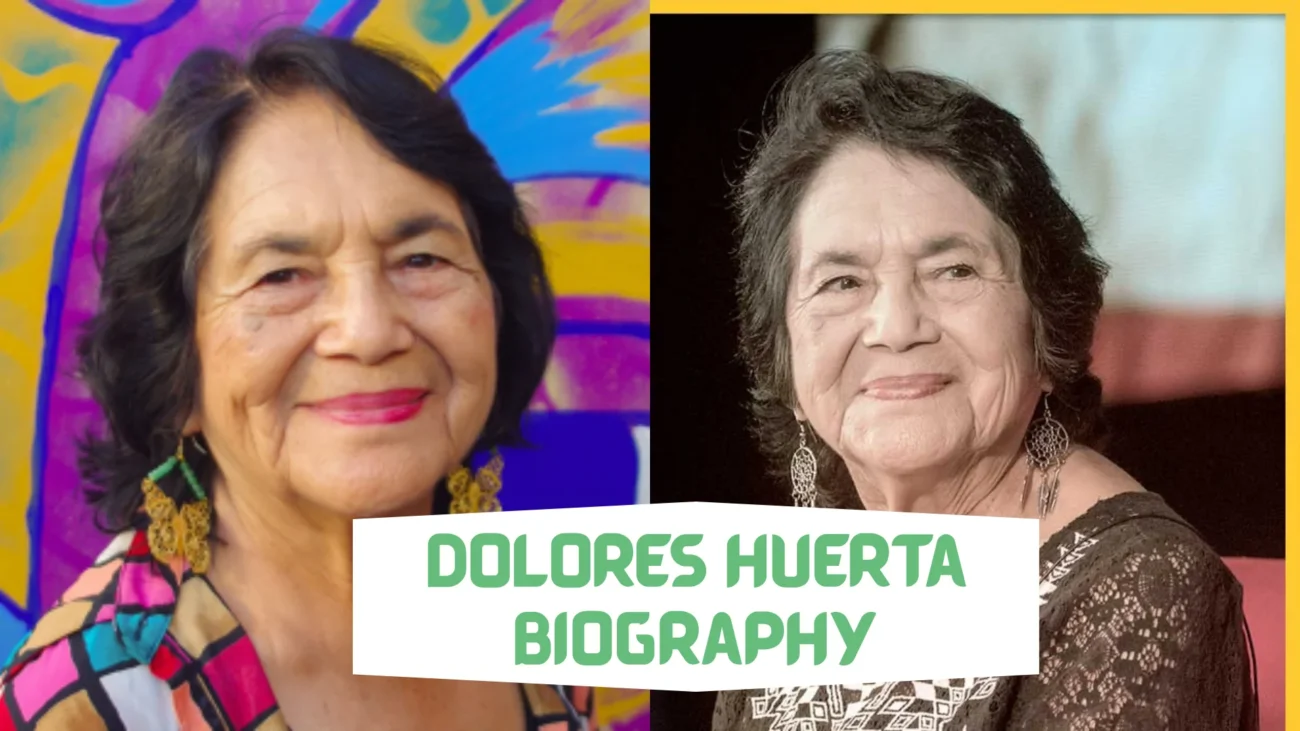
The life of Dolores Huerta stands as one of the most powerful examples of activism, resilience, and leadership in modern history.
As a co-founder of the United Farm Workers (UFW), Huerta has dedicated more than six decades to fighting for the rights of farmworkers, women, immigrants, and marginalized communities.
Quick Facts
| Full Name | Dolores Clara Fernández Huerta |
| Born | April 10, 1930 |
| Age | 93 years (as of 2026) |
| Birthplace | Dawson, New Mexico, USA |
| Nationality | American |
| Occupation | Labor Leader, Civil Rights Activist |
| Parents | Juan Fernández, Alicia Chavez |
| Spouse | Richard E. Huerta (married 1955–divorced 1975) |
| Children | 11 |
| Net Worth | Estimated $1–2 million |
Early Life
Dolores Huerta was born on April 10, 1930, in Dawson, New Mexico. Her birth name was Dolores Clara Fernández. After her parents divorced, she moved with her mother to Stockton, California, where she spent most of her childhood.
Her father, Juan Fernández, was a coal miner who later became a union activist and politician. Her mother, Alicia Chavez, was a successful businesswoman who ran a hotel and restaurant, often offering free meals to struggling farmworkers. This environment exposed Huerta to compassion, community service, and social inequality at a young age.
Despite facing racial discrimination as a Latina, Huerta excelled academically and pursued higher education at Stockton College (now San Joaquin Delta College). She later earned a teaching credential, marking the beginning of her professional journey.
Teaching Career and Awakening to Social Injustice
Huerta began her career as a schoolteacher in California. However, her experience in the classroom became a turning point in her life.
She noticed that many of her students came to school hungry and poorly clothed. These children were the sons and daughters of farmworkers who were paid extremely low wages and worked under harsh conditions.
This realization led Huerta to conclude that education alone could not solve systemic poverty. She decided to leave teaching and pursue activism full-time, aiming to address the root causes of inequality.
Entry into Activism and Meeting Cesar Chavez
Huerta joined the Community Service Organization, a Latino civil rights organization focused on improving social and economic conditions.
During her time there, she met Cesar Chavez, a fellow activist who shared her passion for workers’ rights. Together, they worked on issues such as voter registration and lobbying for better living conditions.
Huerta successfully lobbied for legislation that allowed non-citizens to receive public assistance and pensions—an early sign of her political influence.
Founding the United Farm Workers (UFW)
In 1962, Huerta and Chavez left the CSO to co-found the National Farm Workers Association, which later became the United Farm Workers (UFW).
The UFW focused on:
- Improving wages and working conditions
- Securing labor contracts
- Ending exploitation of migrant workers
- Promoting workers’ rights through nonviolent protest
Huerta was not just a co-founder—she was the union’s chief negotiator, strategist, and organizer.
The Delano Grape Strike and National Boycott
One of the most defining moments in Huerta’s career was her role in the Delano Grape Strike.
This historic strike began in 1965 and lasted five years. Huerta helped organize nationwide boycotts of grapes, mobilizing millions of Americans to support farmworkers.
Her negotiation skills were instrumental in securing contracts that improved wages, working conditions, and worker protections.
“Sí, Se Puede”: A Global Symbol of Hope
Huerta coined the phrase “Sí, se puede” (Spanish for “Yes, it can be done”), which became a powerful slogan for social justice movements worldwide.
The phrase gained international recognition and was later popularized in politics, including the campaign of Barack Obama.
Legislative Achievements and Policy Impact
Dolores Huerta played a key role in shaping labor laws and policies. Her advocacy contributed to the passage of the Agricultural Labor Relations Act of 1975, which granted farmworkers the right to collective bargaining.
She also served on the U.S. Commission on Agricultural Workers, helping to evaluate labor conditions and recommend reforms.
Her efforts extended into:
- Immigration reform
- Women’s rights
- Environmental justice
- Political representation for Latinos
Challenges, Sacrifices, and Personal Struggles
Huerta faced immense challenges throughout her career:
- Gender discrimination in a male-dominated movement
- Arrests and physical violence during protests
- Balancing activism with raising 11 children
In 1988, she was severely beaten by police during a peaceful protest, suffering broken ribs and internal injuries.
Despite these hardships, she remained committed to her mission.
Modern Recognition and Awards
Dolores Huerta has received numerous prestigious awards, including:
- Presidential Medal of Freedom (2012)
- Induction into the National Women’s Hall of Fame
- Eleanor Roosevelt Human Rights Award
Her contributions have been recognized globally as a cornerstone of civil rights and labor movements.
Dolores Huerta Foundation
In 2002, she founded the Dolores Huerta Foundation.
The foundation focuses on:
- Grassroots organizing
- Leadership development
- Civic engagement
- Youth empowerment
It continues her lifelong mission of creating social change.
Recent Developments and Continued Influence
Even in her 90s, Huerta remains active in advocacy. In 2026, she made headlines after publicly addressing long-hidden personal experiences, contributing to broader conversations about accountability and justice within activist movements.
Her courage in speaking out has further cemented her legacy as not just a labor leader, but also a voice for truth and resilience.
Impact on Society and Legacy
Dolores Huerta’s influence is profound and far-reaching:
- She helped transform labor rights in the United States
- Inspired generations of activists
- Advanced gender equality and Latino representation
- Created a blueprint for grassroots organizing
Her work demonstrated that social justice movements must address interconnected issues like race, gender, and economic inequality.
FAQs
Who is Dolores Huerta?
Dolores Huerta is an American labor leader and civil rights activist best known for co-founding the United Farm Workers union.
What is Dolores Huerta famous for?
She is famous for organizing farmworkers, leading the Delano grape strike, and coining the slogan “Sí, se puede.”
What did Dolores Huerta fight for?
She fought for workers’ rights, fair wages, immigration reform, women’s rights, and social justice.
Did Dolores Huerta receive awards?
Yes, she received the Presidential Medal of Freedom and many other honors.
Is Dolores Huerta still alive?
Yes, as of recent reports, she remains active in advocacy work well into her 90s.
Conclusion
The biography of Dolores Huerta is not just a story—it is a legacy of courage, determination, and transformation. From her humble beginnings to becoming a global symbol of activism, she has reshaped the fight for justice.
Her life reminds us that change is possible when individuals stand up against injustice. As her iconic words echo across generations—“Sí, se puede”—we are reminded that collective action can truly transform the world.
